You have probably seen the word Polygon on this site a dozen times. On the ledger, on the buy page, in the payout emails. And you may have nodded along without being sure what it is.
Here is the plain version. No jargon.
Where it came from. Polygon started in 2017 under a different name, Matic Network. Three developers in India built it because Ethereum was getting expensive and slow to use. Transactions cost real money and confirmations took minutes. Fine for moving big sums. Useless for small everyday payments.
The network went live in 2020 as a faster, cheaper companion that sits alongside Ethereum and does the same jobs: settle transactions, run apps, move value. In early 2021 it rebranded to Polygon as it grew into a whole family of scaling tools. The token you may have known as MATIC became POL in 2024. Same network, new name.
Why people settle on it. Fees are a fraction of a cent to a penny. Confirmations take seconds. You use the wallet you already have: MetaMask, Trust Wallet, Phantom with the Polygon network switched on. Exchanges list POL, bridges move funds between Ethereum and Polygon, and you can convert into it or out of it in a couple of clicks. And the whole ledger is public. Anyone can open polygonscan.com and see every transaction, every wallet, every timestamp.
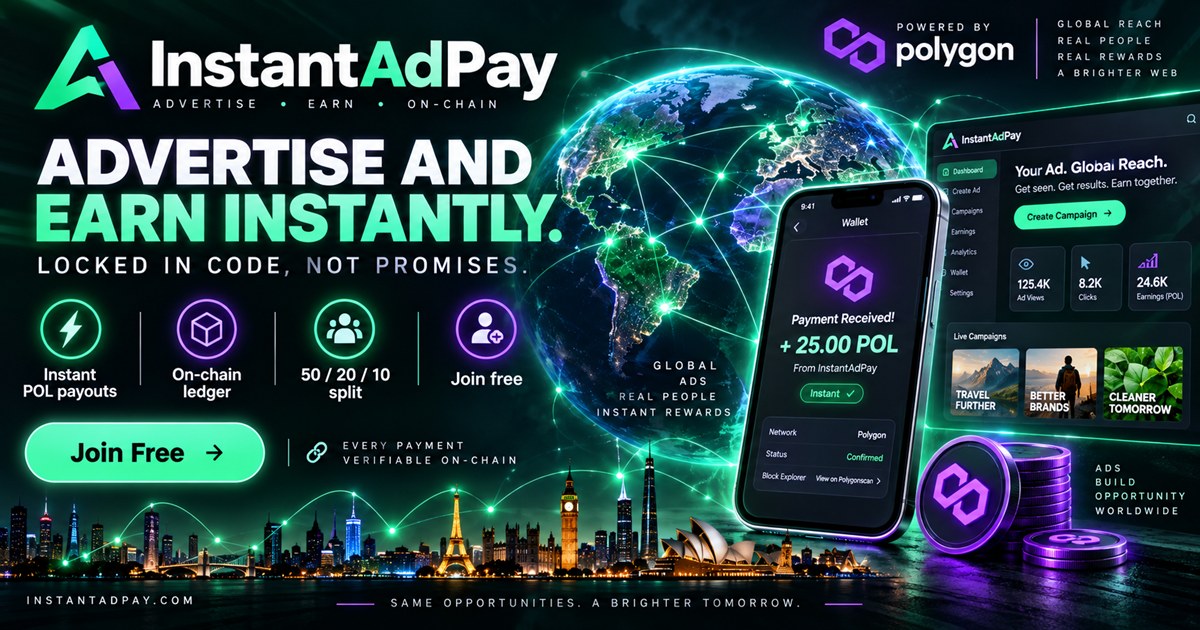
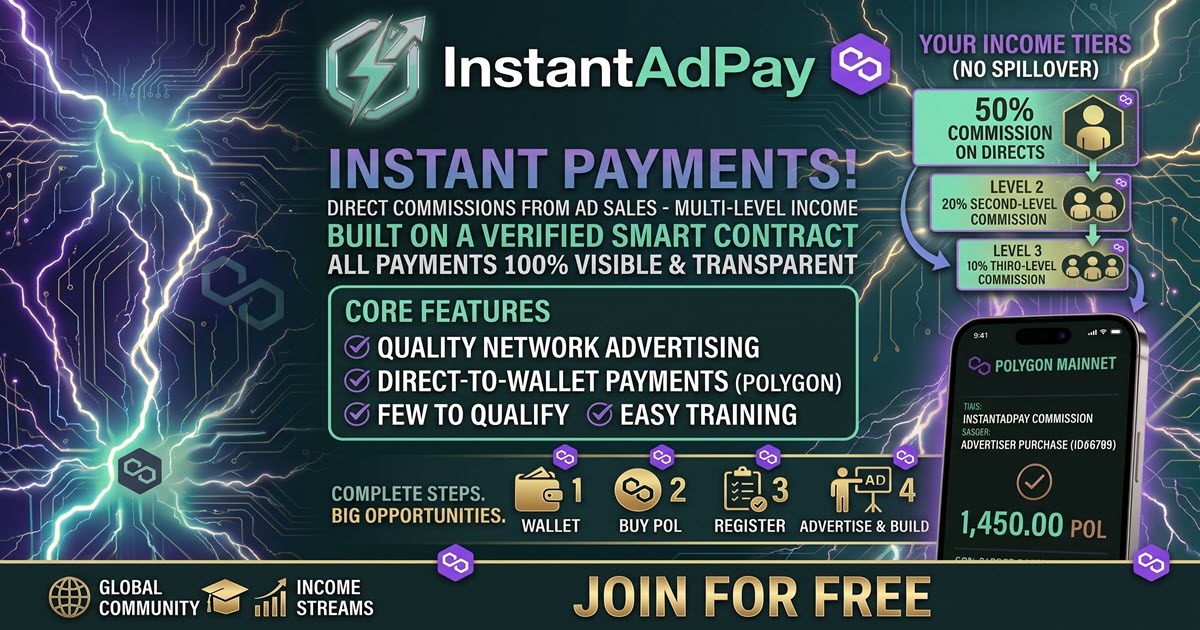
Why it matters here. InstantAdPay sells advertising, and every package is paid in POL on Polygon. The part that makes this site different is what happens in that same transaction: the contract pays the buyer's sponsor line, 50 percent to the direct sponsor, 20 percent to level two, 10 percent to level three, wallet to wallet, before the purchase even finishes confirming. No back office. No payday. No spreadsheet.
That only works on a chain where the fee is pennies. On a network that charged dollars per transaction, splitting a $20 package four ways would eat the payout. On Polygon the whole split costs less than a cent, so what was sent is what arrives.
It also only works on a chain anyone can check. Every payout InstantAdPay makes is on the public ledger, and the live ledger page links straight to it. When the site says a sponsor was paid, you can see the transaction yourself.
The honest part. POL is a cryptocurrency. Its price moves, sometimes down. Packages are priced in dollars and settled at the live rate, so the POL amount changes day to day. Nobody is promising you income. What the contract promises is narrower and more useful: when a package is bought, the payout lands, instantly, on a ledger you can read.
If you have never held POL, the wallet guide walks through buying it with a card and getting it into a wallet that works here. Ten minutes, once.
Marty